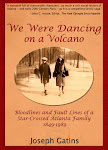
[Excerpts from Chapters 28 and 29, "Culture Shock" and "Tabasco in Buckhead."]
In many ways, the Gatins family’s permanent return to Atlanta proved to be a culture shock for both the family and for their new American friends and neighbors. To begin with, none of the children spoke English in 1952. The oldest three had forgotten it, the youngest three had never spoken it. For Sylvia in particular, who had only visited Atlanta previously, this was a strange new world. In Paris, there was the underground Métro for transportation; in Atlanta, electric streetcars going up and down Peachtree Street. In America, the children had the funny papers, Dick Tracy and Snuffy Smith, and later, the very irreverent Mad magazine. In Paris, there was Tintin’s Hebdomadaire, which Grandmother Eglé religiously shipped to her grandchildren.
The Gatins kids looked and dressed differently from American children. In elementary school, the boys all wore shorts with long knee socks (flannel shorts in winter, khaki cotton in summer) and high-top leather shoes from France. American kids wore T-shirts and jeans and rubberized, high-top Keds. The food was strikingly different, too. In France, we ate macaroni with butter and Parmesan. In America, spaghetti was lathered with Ketchup. Sylvia made sauce Béarnaise to put on steaks; in America, there was Heinz 57 Sauce. Instead of hot roasted chestnuts bought from Paris street vendors in newspaper cornets, we stopped at the drive-by watermelon-and-fruit stand at the intersection of Peachtree Street and Peachtree Battle Avenue. And there was hot popcorn at the movies in Atlanta!
Still, assimilation did occur, somewhat faster for me and Charles and Sophie, who’d been born in the U.S., than for the youngest three. By dint of daily repetition, I recall learning to say the Pledge of Allegiance and the Hail Mary every day at Christ the King School by rote memory and sound—not having the faintest idea what all the words meant. Charles and I stopped dreaming in French, and with the help of little crystal radios attached to a metal night-light, learned idiomatic English while tuned in to Atlanta Crackers baseball games, Georgia Tech football games and the Grand Ole Opry, whose AM broadcasts from Nashville were powerful enough to reach Atlanta. Cousin Minnie Pearl, with her trademark greeting, “How-deeeeeee,” was our favorite. Rather than Citroën sedans and 2CV economy cars, we learned to recognize the sweeping lines of Plymouths and Buicks, Chevrolets, Fords, the ill-fated Edsels and every version of the modified hot rods that teenagers used to cruise up and down Peachtree Street.
It cannot be overestimated how memory of the Lost Cause suffused Georgia and Atlanta in the 1950s. Gov. Herman Talmadge has just been succeeded by an equally adamant segregationist, Marvin Griffin. Confederate flags flew everywhere after the state flag was changed in 1956 to include the stars and bars, as a protest to the U.S. Supreme Court’s desegregation ruling, Brown v. Board of Education. The little Studebaker sedans still driving around Atlanta traded in their “I Like Ike” bumper stickers for vanity license plates depicting a scruffy, mustachioed soldier in grey. The tagline: “Fergit, Hell!” Sometimes, sinister-looking redneck ruffians rode around town with Ku Klux Klan posters affixed to the sides of their big sedans, sidearms on their dashboards, after another cross burning on the top of Stone Mountain.


 Posts
Posts